15 Weird Hedgehog Facts That Sound Made Up (But Are Totally True)
Spiky babies, foamy spit baths and a surprising family tree.
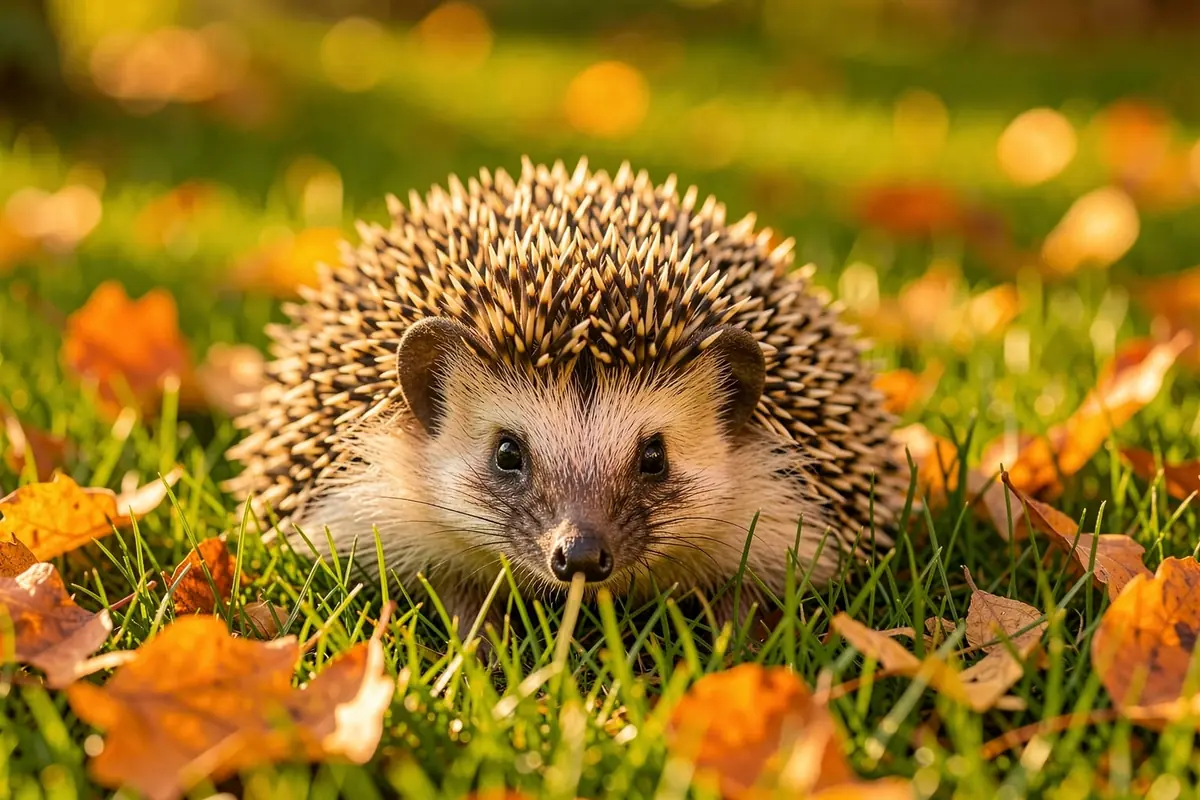
Hedgehogs look like a pincushion that learned to walk, and somehow that's the least weird thing about them. These little snufflers are full of surprises. Here are 15 real hedgehog facts that sound completely made up.
1.Their name is basically "hedge pig"
Hedgehogs like to root around in hedges looking for snacks, and they make little snuffling, grunting noises while they do it. Put those together and you get "hedgehog." Honestly, fair.
2.Their babies are called hoglets
Yes, really. A baby hedgehog is a hoglet, which might be the cutest word in the entire animal kingdom.
3.Hoglets are born with their spines tucked away
Newborn hoglets have soft spines hidden under a fluid-filled layer of skin, which protects mom during birth. Within a few hours, the spines start poking through. Nature thought of everything.
4.Their spines are actually hair
Hedgehog spines are hollow, stiffened hairs made of keratin, the same stuff as your fingernails. So technically, a hedgehog is having the world's most extreme bad hair day.
5.An adult can have thousands of spines
A grown European hedgehog has somewhere around 5,000 to 7,000 spines. Nobody has the patience to count every one on every hedgehog, so that's an estimate, but it's a lot.
6.They can't shoot their spines
That's a myth, and it's not even true for porcupines. Hedgehog spines also aren't barbed, and they don't come out easily. A hedgehog's whole defense plan is "become a spiky ball and wait."
7.Rolling into a ball takes serious muscle
A band of muscle along a hedgehog's back works like a drawstring bag. When it tightens, the hedgehog curls up with its face, belly and feet tucked safely inside the spiky part.
8.They give themselves foamy spit baths
When a hedgehog finds a strong new smell, it may lick and chew it until it's foaming at the mouth, then twist around and smear the froth all over its spines. It's called self-anointing, and scientists still aren't totally sure why they do it.
9.They're not related to porcupines
Despite the matching spiky look, hedgehogs are more closely related to shrews and moles. Porcupines are rodents, which makes them closer cousins to mice. Same style, totally different family.
10.There are no wild hedgehogs in the Americas
Wild hedgehogs are native to parts of Europe, Asia and Africa. If you see one in the U.S., it's almost certainly someone's pet, and pet hedgehogs are usually African pygmy hedgehogs.
11.Milk is bad for them
The old idea of leaving out a saucer of milk for a hedgehog is a mistake. Hedgehogs are lactose intolerant, and cow's milk can make them sick. Wildlife groups suggest water instead.
12.They eat a lot of bugs
Wild hedgehogs mostly munch on insects like beetles and caterpillars, plus worms and slugs. That's why some gardeners are thrilled to have one living in the backyard.
13.European hedgehogs hibernate
When food gets scarce in winter, European hedgehogs curl up in a nest of leaves and hibernate. Their heart rate and body temperature drop way down until spring. Sounds like a solid plan for January, honestly.
14.They can swim and climb
Hedgehogs look like they were built for waddling, but they can swim and are surprisingly good climbers. Getting back down is a different story.
15.They put in serious nightly mileage
Hedgehogs are mostly active at night, and a wild one can wander a mile or so in a single night looking for food, and some roam even farther. Tiny legs, big commute.
What did you think?
Tap a badge to react. You can pick more than one.
More from Buzzuh
-
 CUTE
Can You Pass This Wild Animal Trivia Quiz?
Three hearts, purple tongues and otters holding hands. Nature is weird.
-
 OMG
Why Are Christmas Colors Red and Green? Blame the Holly (and a Few Thousand Years of Decorating)
Evergreens, berries, a very red plant and one Santa myth that just won't quit.
-
 OMG
Can You Get 10/10 on This North Pole Animals Trivia Quiz? Meet Santa's Arctic Neighbors
Polar bears, narwhals, walruses and one bird that would never, ever visit Santa.
-
 CUTE
Can You Get 10/10 on This Real-Life Christmas Reindeer Trivia Quiz?
Forget flying. Real reindeer are even weirder than the legend.