Why Do We Trick-or-Treat on Halloween? The Surprisingly Old History of Begging for Candy
Kids have been knocking on doors for treats for centuries. The candy is the new part.
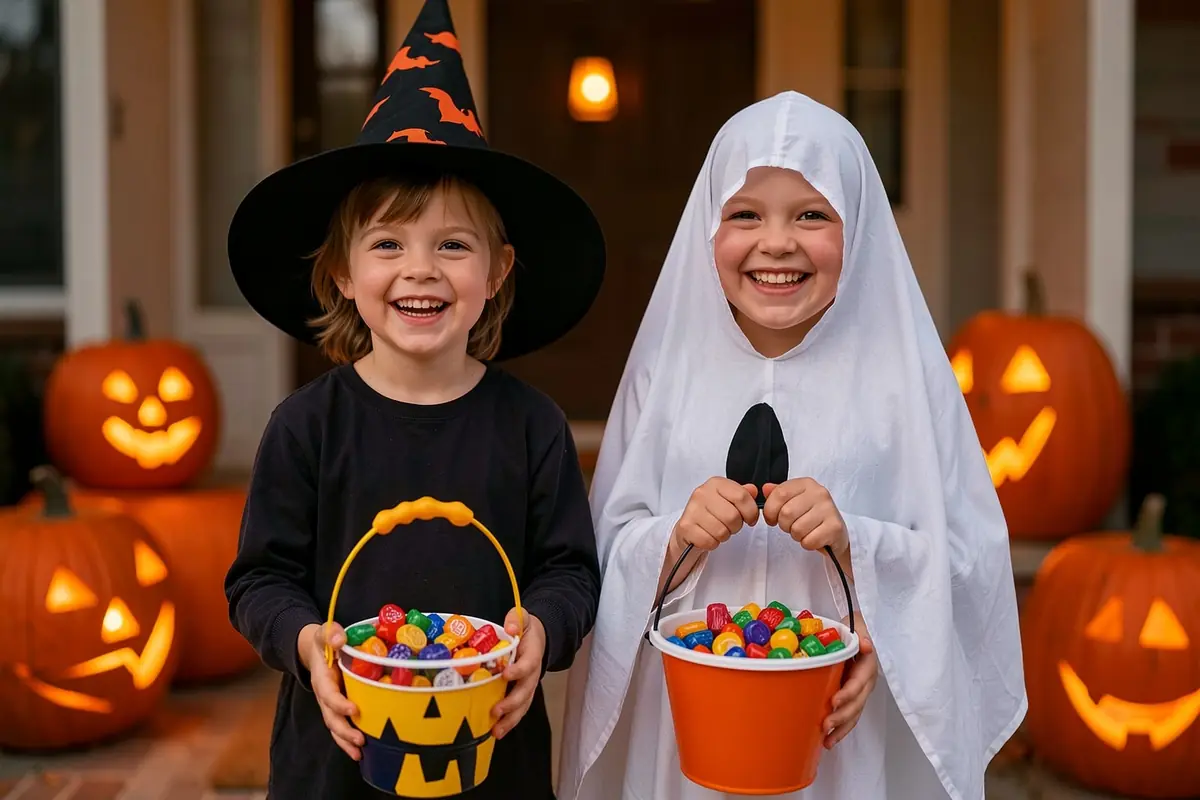
Trick-or-treating grew out of old European customs, like "souling," where people went door to door on All Souls' Day trading prayers for small cakes, and "guising" in Scotland and Ireland, where kids in costume performed for treats. Immigrants brought these customs to America, the phrase "trick or treat" showed up in print in Canada by 1917, and the tradition took off across the U.S. after World War II.
It may start with an ancient harvest festival
Halloween's roots are often traced to Samhain, a Celtic festival that marked the end of the harvest and the start of winter. Many people believed it was a time when the boundary between the living world and the spirit world got thin.
Some historians think people wore disguises or left out food for wandering spirits around this time, though experts still debate exactly how much of modern Halloween comes straight from Samhain. Either way, "leave out snacks so the spooky visitors stay happy" is a pretty good summary of Oct. 31 at your house too.
Medieval kids went "souling"
In medieval England, Christian holidays settled in right next door: All Saints' Day on Nov. 1 and All Souls' Day on Nov. 2. Around All Souls' Day, the poor, and later children, went door to door "souling." They offered to pray for a household's dead relatives in exchange for soul cakes, small spiced cakes or biscuits.
So the original deal was prayers for pastries. Today it's a costume and a polite "thank you" for a fun-size candy bar. Inflation is real.
Then came "guising"
In Scotland and Ireland, kids went "guising," short for disguising. They dressed up and went door to door, but they had to earn their treats by singing a song, reciting a poem or telling a joke. The reward was usually fruit, nuts or a coin.
This is the part modern trick-or-treaters skipped. Imagine having to perform a little show at every house just to get a lollipop. Some neighbors would honestly love that.
The custom crossed the ocean
Irish and Scottish immigrants brought their Halloween customs to America in the 1800s. By the early 1900s, Halloween night in many U.S. towns was famous for pranks, like tipped-over outhouses and soaped windows, and some of them got pretty rowdy.
Many historians say towns and parents pushed Halloween parties and supervised activities in the 1920s and 1930s partly to steer kids away from mischief. The idea: give them a treat, and maybe they'll skip the trick.
"Trick or treat" gets its name
The earliest known printed use of the phrase is traced to a 1917 newspaper in Sault Ste. Marie, Ontario, Canada, which reported gangs of kids calling out "tricks or treats." The phrase spread through the U.S. in the 1930s.
World War II slowed things down, since sugar was rationed. But after the war, with the baby boom, new suburbs packed with kids and candy companies paying attention, trick-or-treating took off and became the coast-to-coast tradition we know now.
So, are we still doing tricks?
Not really. These days the "trick" part is mostly a polite threat nobody plans to carry out. The real tricks are the house that hands out toothbrushes and the porch with the motion-activated skeleton.
What did you think?
Tap a badge to react. You can pick more than one.
More from Buzzuh
-
 LOL
What Kind of Thanksgiving Guest Are You?
Every family has one of each. Which one are you?
-
 WIN
Plan Your Thanksgiving Day and We'll Tell You Which Pie You Are
Classic, nutty, fruity or a little underrated? Your plans decide.
-
 OMG
Can You Guess the Surprising Origins of These Everyday Inventions?
Wallpaper, melted chocolate and one very prickly dog walk.
-
 WIN
Christmas This or That: 12 Holiday Choices You Have to Make
Real tree or fake? Christmas Eve or Christmas morning? Pick a side.