Why Do We Send Christmas Cards? Blame a Very Busy Guy in 1843
The first Christmas card was a time-saving hack, and it caused a tiny scandal.
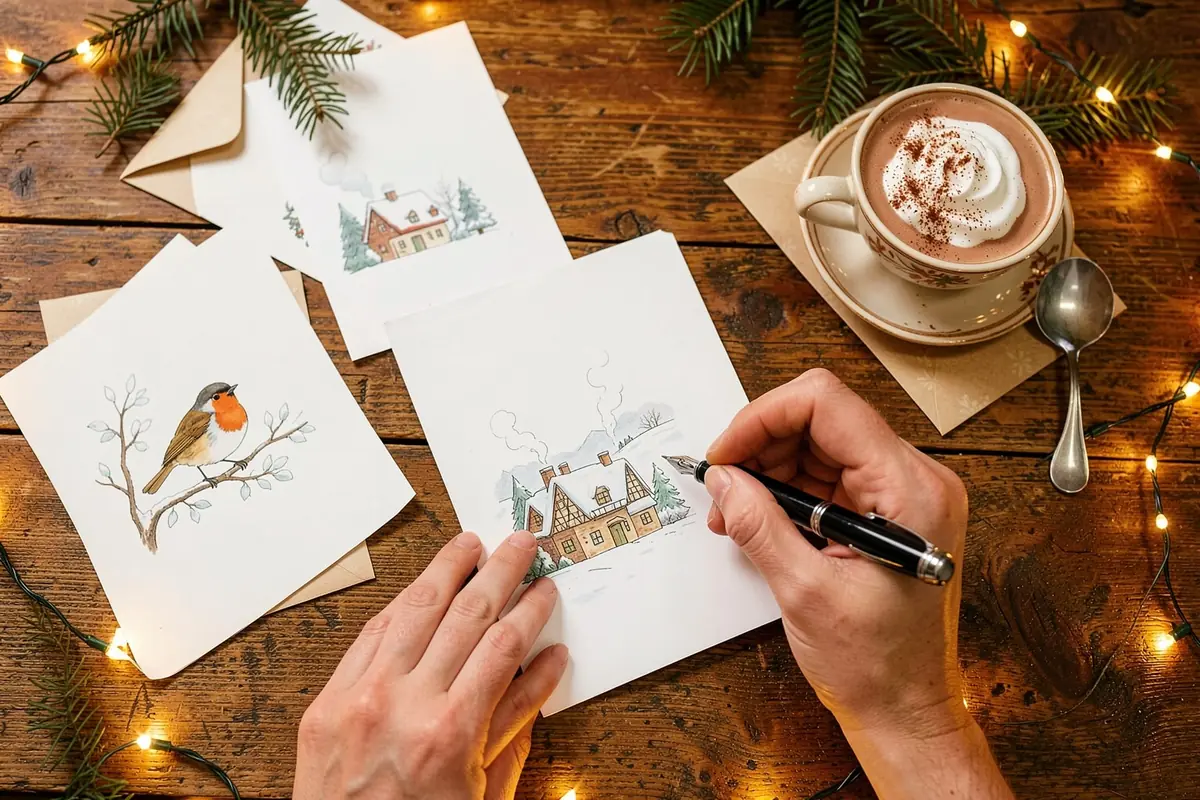
We send Christmas cards because of a busy Englishman named Henry Cole. In 1843, he had too many holiday letters to answer, so he asked an artist friend to design a printed card with a cheerful message he could send to everyone at once. Cheap new postage in Britain made mailing cards affordable, the idea caught on, and by the late 1800s Christmas cards were a big hit in America too.
It started with a guy who was behind on his mail
In 1840s London, it was polite to answer every holiday letter you got with a handwritten note. Henry Cole, a well-connected civil servant, had a lot of friends, which meant a lot of letters, which meant a very sore hand.
So in 1843 he came up with a shortcut. He asked his artist friend John Callcott Horsley to design a printed card that already said "A Merry Christmas and a Happy New Year to You." All Cole had to do was sign it and pop it in the mail. It was basically the first group text.
The very first card caused a tiny scandal
About 1,000 copies were printed and hand-colored, and the extras were sold to the public. The main picture showed a big, happy family raising a toast around the table, with side panels showing people giving food and clothing to those in need.
Not everyone loved it. Some critics were upset that the family picture showed a small child taking a sip from a glass of wine. The first Christmas card ever, and it already had people writing angry letters. Some traditions really are timeless.
Cheap stamps made it all possible
Cole's timing was perfect. In 1840, Britain had launched the Penny Post, which let people mail a letter almost anywhere in the country for just one penny. Cole had actually helped push for that postal reform, so he was ready to take advantage of it.
Cheaper postage, plus better color printing later in the century, turned cards from a fancy novelty into something regular families could send by the dozen.
Why are there so many robins on Christmas cards?
If you've ever wondered why little red-breasted birds show up on so many holiday cards, the mail carriers may be part of the answer. In the early Victorian years, British mail carriers wore bright red coats, and legend says people nicknamed them "robins." Whether or not the nickname really caught on, robins became a Christmas card favorite, sometimes shown carrying letters or perched by a mailbox.
Victorian cards could also get delightfully weird. Alongside snowy scenes and holly, people sent cards with frogs, mice, insects and other odd creatures that had nothing to do with Christmas. Nobody quite knows why. The 1800s were a strange time.
How Christmas cards took over America
In the U.S., the big push came from Louis Prang, a Prussian-born printer in Boston (his hometown is now part of Poland) who is often called the "father of the American Christmas card." He began selling Christmas cards in America in the 1870s, and his colorful designs made them a must-have.
Today the tradition has gone in every direction, from glittery cards and holiday photo cards to the yearly family newsletter that tells you exactly how everyone's soccer season went. The goal is the same as Cole's: a quick, cheerful way to say "thinking of you" to everybody at once. Your hand is still going to be sore, though.
What did you think?
Tap a badge to react. You can pick more than one.

More from Buzzuh
-
 LOL
Plan Your Christmas Eve and We'll Tell You Which Holiday Pajamas You Are
Matching plaid, fuzzy onesie, classic flannel or comfy sweats? Let's find out.
-
 LOL
Plan Your Holiday Party and We'll Tell You Which Ugly Christmas Sweater You Are
Jingle bells, pom-poms and questionable life choices. We love it.
-
 WIN
Plan Your Perfect Thanksgiving Day and We'll Tell You Which Side Dish You Are
Let's be real: the sides are the stars.
-
 WIN
Can You Get 10/10 on This Christmas Cookies and Treats Trivia Quiz?
Gingerbread, sugarplums and the cake that looks like a log.